MSI MEG Z690 Unify review Introduction
MSI MEG Z690 Unify review Introduction
MSI has returned with an entirely black motherboard, and it does not apply to RGB. And that’s something we appreciate. This Z690 Alder Lake-ready motherboard features five M2 slots, WIFI6e, and a pair of 2.5 GigE connectors, among other features. The Z690 motherboards from MSI will be robust, with some of the models offering a choice between multiple configurations. The range exists the Z690 ACE, which will be the company’s highest-ranking Z690 motherboard when it launches later this year.
Additionally, MEG Unify motherboards (reviewed today) are typically all-black in style and do not include RGB LEDs. Then Carbon, Edge, and Force motherboards with Wi-Fi are available in the lower-ranked MPG series. Additionally, a MAG Z690 Tomahawk Wi-Fi, a MAG Z690 Torpedo, and several MSI Pro motherboards will become available.
Alder Lake and Z690
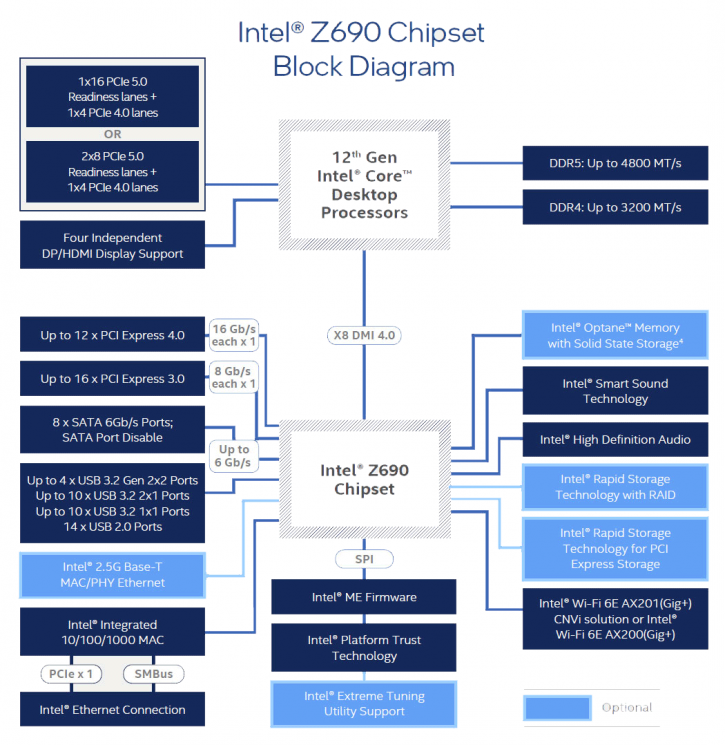
Z690 is the enthusiast chipset from Intel, and this motherboard is powered by it. It also marks the dawn of a new era; Intel’s Alder lake processors are a wholly new and faster architecture. We have written a lot about it. The new processors will have energy and performance cores to balance power consumption in idle and load conditions. With the Alder lake platform, new features are brought to the table. DDR5 and PCIe Express 5.0 are among the first-ever for intel products.
BIG versus little
As an alternative to Intel’s previous releases, which focused solely on single-core and gaming performance, Alder Lake puts the company fully back in the multi-core ring, led by its squad of sixteen-core goliaths built on Intel’s transistor-dense 10-nanometer manufacturing process. But this time, Intel delivers its own interpretation of the term BIG.little. We’ll talk a little more about it on the following pages.
MSI MEG Z690 Unify
The Unify might not be that uber super-premium product in the motherboard range, but it boasts many features that will impress and ticks most of the right boxes. First and foremost, there’s an extensive 19+2 Power Phase design with 105A Smart Power Stages, one of the more muscular configurations we’ve seen this launch and will help overclock any new CPUs. Of course, support for the latest DDR5-6666 memory, two PCIe Gen 5 x16 slots, and five M.2 slots, all of which support the super-fast PCIe Gen 4 specification. Also present; Thunderbolt 4 ports, USB 3.2 Gen 2×2. To make things even better, you also get a twin 2.5 GbE LAN, along with a Wi-Fi 6 and a whole host of other features. Because it is such a connection behemoth, the Z690 Unify is ideal for a large amount of high-end storage. We review the MEG Unify series, fitted with Thunderbolt 4 ports, USB 3.2 Gen 2×2 connectors, and up-to DDR5-6666 compatibility. MSI further enhances the motherboard to include five M.2 slots, four of which can support PCIe 4.0 technology. Technology aside, the Unofy is all about that deep dark black design, and yeah, that works alright.
Alder Lake – a Hybrid Computing Architecture
It hasn’t exactly been a secret that Intel has been putting in significant effort to re-take the CPU market. After numerous respins, it was time for a new architecture, created from the ground up with a hybrid design; meet Alder Lake, which you’ve probably already heard a lot about. They will also be the first to adopt a hybrid architecture, similar to ARM’s BIG.little, that combines high-performance cores combined with efficient ones, making them the first of their kind for Intel. Furthermore, this new generation is now proven to be the first to support DDR5 memory (DDR4 compatible memory controllers as well) and PCI-Express 5.0, making it the first generation to do soAlder Lake CPU architecture has two different CPU cores
The following are a set of slides from the presentation that you can view. As previously indicated, we acquired this information hours before the embargo was lifted and will fill in the gaps throughout the day. Mind you the Core i9-12900K has 16 cores and 24 threads. 8 P-Core (16 threads) and 8 E-Core (with 8 threads). The CPU has 30 MB L3 cache, 3 MB per core (Golden Cove) and 3 MB per cluster (E-Core) (Gracemont). That’s 8 P-Cores for 24 MB and 6 MB from each of the two clusters of 4 E-Cores. The chip has 12.5 MB of L2 cache and 1.25 MB of L3 cache.
Gracemont (energy efficient cores)
Alder Lake is Intel’s codename for the 12th-generation of Intel Core processors based on a hybrid architecture utilizing Golden Cove high-performance cores and Gracemont power-efficient cores. According to Intel, Alder Lake is a “performance hybrid” in their portfolio, as it is focused on performance rather than power consumption. Gracement, wasn’t that Intel Atom related? Gracemont is an upcoming microarchitecture for low-power processors that will also be used in Intel’s systems on a chip (SoCs). It will be the successor of the Tremont microarchitecture. Additionally, it will be deployed as low-power cores in a hybrid architecture for Intel’s Alder Lake processors, similar to its predecessor. The cores have been further enhanced. Gracemont is actually the 4th generation out-of-order low-power Atom microarchitecture, built on the Intel 7 manufacturing process. Intel also says that Alder Lake will provide the most performance per watt of any of its processors. You’re going to notice a number of things, among them, increases in L1 caches; the Instructions cache for example was doubled to 64KB with an up to 4MB L2 cache, remember we’re still talking the energy-friendly cores here. Microsoft will have to introduce support for these sophisticated scheduling features to x86-64 Windows in order for them to be supported for the next-generation hardware schedulers. Key changes:
64KB per core Level 1 instruction cache
DDR5 memory
PCIe 5.0 support
Support for AVX, AVX2, and AVX-VNNI instructions
The Hybrid Architecture in Alder Lake is much different from that of hybrid concepts such as those we are familiar with in smartphones, such as Arm’s BIG.little processor. The most important goal of various smartphone technologies in the smartphone world is to save on energy consumption. This is undeniably one of the benefits of Intel’s Hybrid Architecture, but the increased efficiency will also result in a higher overall perf level as a result of increased efficiency.
Golden Cove (performance cores)
The architecture diagrams of the low-power Gracemont cores have just been presented to you, however, Alder Lake will make use of its Golden Cove CPU cores when speed and performance is critical. And these should make a significant difference in IPC when it comes to processing data compared to say Comet- and Rocket lake. Golden Cove CPU microarchitecture will take the place of the Sunny Cove, Willow Cove, and Cypress Cove microarchitectures, according to Intel. Originally described to as 10 nm Enhanced SuperFin, it will be made using Intel’s Intel 7 manufacturing node, which was introduced in 2012. (10ESF). These high-performance cores will find their way into scalable processors such as Alder Lake and Xeon, as well as Sapphire Rapids. According to Intel, all of the enhancements combined should result in an improvement in IPC of 19 percent, which is on par with or slightly higher than the improvement achieved by Sunny Cove when compared to Skylake. That should even be sufficient to dethrone the Zen 3 architecture of the Ryzen 5000 CPUs.