Core i9 12900K DDR4 3600 vs DDR5 5200 performance review Introduction
Core i9 12900K DDR4 3600 vs DDR5 5200 performance review Introduction
Core i9 12900K (DDR4 3600 CL16) vs. (DDR5 5200 C40) perf review
8x BIG and 8x Little and then a memory choice
It was only recently that Intel debuted an Alder Lake-based CPU, the Core i9 12900K, and the platform is prepared for the future with its tremendous performance and platform DDR5 memory. But it also works with DDR4 memory, and it works extremely well with DDR4 actually. When compared to DDR4, DDR5 offers a number of major advantages, the most visible of which is, as one might imagine, the increased frequency. Other new DDR5 characteristics that are crucial to us enthusiasts must be taken into consideration, as well. DDR4 on their end started at 2133 MHz, but these days can be found in an affordable sweet spot configuration of 3200 and 3600 MHz. So how does it perform, and is your money better spent on DDR4?
Well, the answer is a little more intricate as DDR5 also comes with new features like a Power Management Integrated Circuit, often known as a PMIC, which is responsible for controlling voltage changes. This effectively allows the DDR5 module to take over energy management and lessen the demand placed on the motherboard controller. Compared to DDR4, the nominal DDR5 voltage is 1.1 V, but the normal DDR4 voltage is 1.2 V. And while DDR4 is normally 1.35V XMP, it can be as high as 1.45V in some instances. When it comes to the XMP voltage, DDR5 is most likely using 1.25V. Talking XMP; DDR5 also introduced XMP 3.0, which is an update to the previous version. By raising the number of profiles from 3 to 5, it is possible to fine-tune the system. This could imply three profiles for manufacturer settings and even two placeholders for users to save their own profiles, depending on the configuration. We all expected massive performance improvements from DDR5 memory. As it turns out that’s not entirely the case, which this review will demonstrate. If you are purchasing a new system, it may be worthwhile to purchase DDR5 memory; however, it is expensive. Z690 motherboards with DDR4 DIMM slots were developed by motherboard manufacturers as a middle-of-the-road solution. Because Alder-Lake CPUs are capable of supporting both memory formats, they may be a viable alternative in terms of affordability, provided that the performance difference is not too great. In this article, we’ll take a look at what we found.
Our setup will be based on the two sweet spot configurations; DDR5 5200 CL40 versus commonly and widely used DDR4 3600 CL 16 kit. For motherboards, we’ll be using the Z690 HERO from ASUS, and to maintain consistency we’ll use an ASUS Z690 TUF motherboard for the DDR4 platform. Both motherboards have exactly the same BIOS build and are set up exactly the same in their configuration options.
We’re specifically using these two motherboards as both, in the BIOS, have an option to revert the platform towards reference performance related to Power and turbo states. So on both platforms, the processor will be behaving exactly the same as well, ergo the difference in performance outcome can be objectively measured in between the two DDR memory formats. Will there be a substantial enough difference for DDR5? Or is DDR4 still enough …
Product Showcase
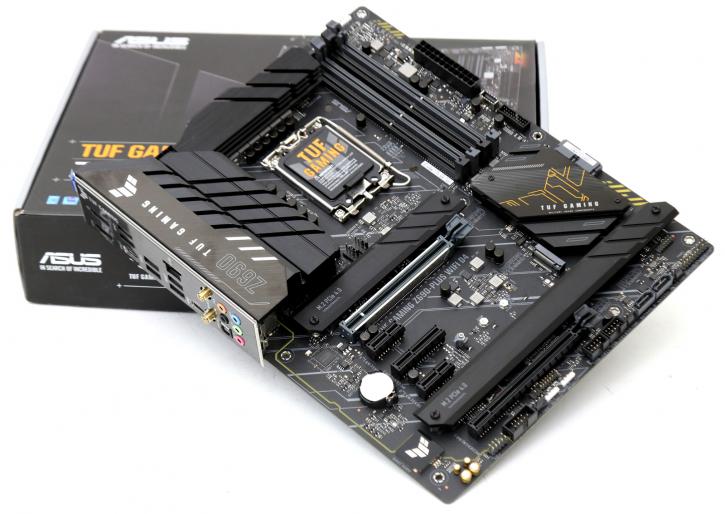
To be completely honest, it’s a little strange to see DDR5, PCI-Express Gen 5, Alder Lake, and then all of a sudden see a shift back to DDR4. It is a real option, and it is quite possible that you will save money as a result of your decision. While there is no doubt that DDR5 will be the memory of choice in the future, as this article will illustrate, the performance difference between the two is not significant, and in certain cases is even insignificant. For the sake of this article, we will be using the ASUS Z690 TUF Gaming WIFI D4, which is the DDR4 variant. For DDR4 we apply a 2x16GB at 3600 MHZ, rated CL16.
Kingston FURY 5200 MHz CL40 memory is used on the DDR5 frontend. Both memory types are configured at the advertised SPD profile. Below is an overview of the ASUS DDR4 motherboard used.