MSI Z690 EDGE WIFI (DDR4) review Introduction
MSI Z690 EDGE WIFI (DDR4) review Introduction
DDR5 is available, as is the most recent Intel Z690 chipset, which has been tuned for it as well. We’ve tried the platform, and while my overall impression is positive, I believe that DDR5 might have been launched a bit too early and too soon. The MSI MPG Z690 Edge Wi-Fi DDR4 motherboard is up for review today, and it’s a good one. Yes, you read it correctly: a Z690 platform with the most up-to-date memory interface is being introduced. In addition to meeting the requirement for a new platform, this one retains DDR4 capability at its core.
Alder Lake and Z690
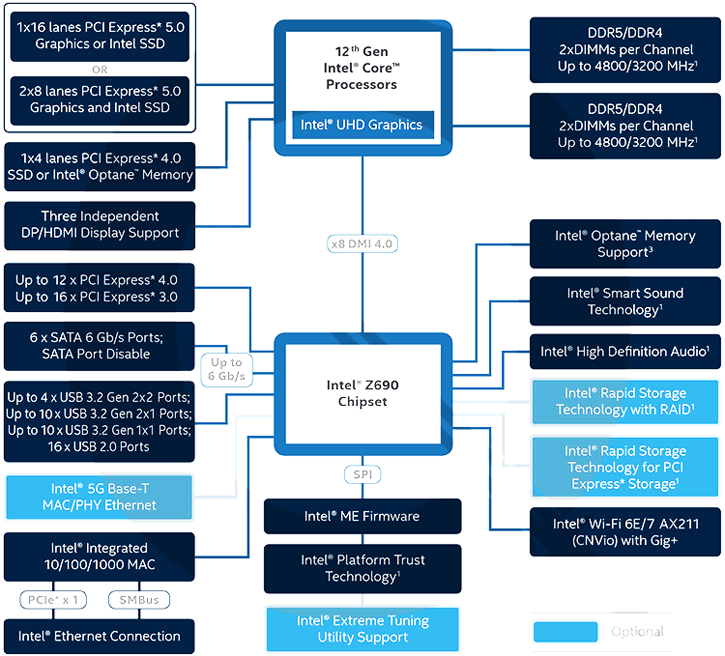
Z690 is the enthusiast chipset from Intel, and this motherboard is powered by it. It also marks the dawn of a new era; Intel’s Alder lake processors are a wholly new and faster architecture. We have written a lot about it. The new processors will have energy and performance cores to balance power consumption in idle and load conditions. With the Alder lake platform, new features are brought to the table. DDR5 and PCIe Express 5.0 are among the first-ever for intel products.
BIG versus little
As an alternative to Intel’s previous releases, which focused solely on single-core and gaming performance, Alder Lake puts the company fully back in the multi-core ring, led by its squad of sixteen-core goliaths built on Intel’s transistor-dense 10-nanometer manufacturing process. But this time, Intel delivers its own interpretation of the term BIG.little. We’ll talk a little more about it on the following pages.
MSI MPG Z690 Edge Wifi DDR4
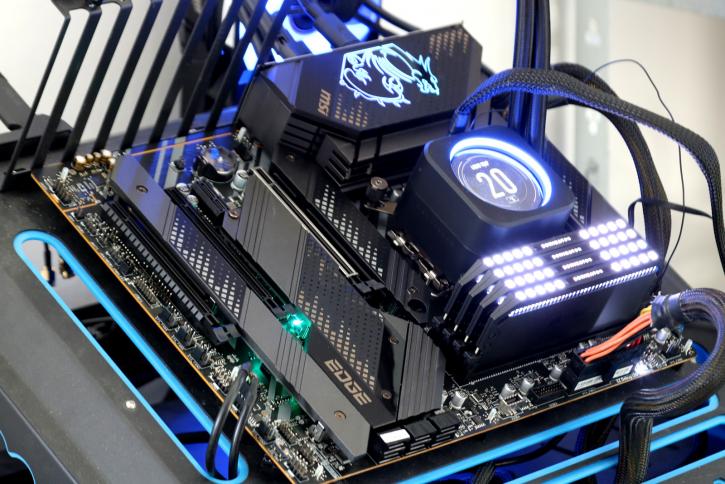
The MSI MPG Z690 Edge Wifi DDR4 reveals itself in a black design paired with heatsinks, but it also includes an I/O shield that has already been affixed to the motherboard. The VRm on this one is beefy; 16 real phases (15+1), PWM-Controller: RAA229131 and MOSFETs CPU are 15x 75A RAA220075 and for the SoC 1x 75A RAA220075. When you take a glance at the board, you will instantly see that all four M.2 slots are equipped with heatsinks. Furthermore, they are all capable of running at PCIe 4.0 speeds. The first x16 slot is capable of supporting the sixteen PCIe 5.0 lanes; the other slots are only capable of supporting four PCIe 3.0 lanes. Despite the fact that the number of USB ports remains at eight, they are significantly quicker; five of them operate at 10Gbit/s and one even at 20Gbit/s. The internal USB-C header continues to operate at its previous speed of 10Gbit/s. MSI has included an ASMedia ASM1061 controller in order to maintain the ability to provide six SATA ports. Further improvements have been made, including the addition of an optical audio output and the installation of two antenna connections, which are connected to an Intel AX201 card that supports Wi-Fi 6. MSI uses the ALC4080 codec, which is known for its proper sound. Except for a few small irregularities, it’s difficult to find something at fault with this board at its $300 price point.
It was time for a new architecture, created from the ground up with a hybrid design; meet Alder Lake, which you’ve probably already heard a lot about. They will also be the first to adopt a hybrid architecture, similar to ARM’s BIG.little, that combines high-performance cores combined with efficient ones, making them the first of their kind for Intel. Furthermore, this new generation is now proven to be the first to support DDR5 memory (DDR4 compatible memory controllers as well) and PCI-Express 5.0, making it the first generation to do so.
Performance cores
Alder Lake will make use of Golden Cove CPU cores when speed and performance is critical. And these should make a significant difference in IPC when it comes to processing data compared to say Comet- and Rocket lake. Golden Cove CPU microarchitecture will take the place of the Sunny Cove, Willow Cove, and Cypress Cove microarchitectures, according to Intel. Originally described to as 10 nm Enhanced SuperFin, it will be made using Intel’s Intel 7 manufacturing node, which was introduced in 2012. (10ESF). These high-performance cores will find their way into scalable processors such as Alder Lake and Xeon, as well as Sapphire Rapids. According to Intel, all of the enhancements combined should result in an improvement in IPC of 19 percent, which is on par with or slightly higher than the improvement achieved by Sunny Cove when compared to Skylake. That should even be sufficient to dethrone the Zen 3 architecture of the Ryzen 5000 CPUs.